大家都說小明很菜,有一天,小明突然就被端走了
覺得不好笑的請舉手=.=
22.2.09


[吉米牌旅拍]台北賓館及總統府
其實這個活動應該是二月初去的,
卻被我很懶惰的拖到現在
話說很久以前我就想去台北賓館拍,
但是因為2008年整年度只開放四次,所以一直無緣
沒想到從2009年開始,台北賓館每個月會開放一次,
而且剛好是在我查詢的這個星期就有,Lucy又剛好上來,於是就被我一起拖去啦~
台北賓館正門口,進去就不能拍照了~

台北賓館後面是日式庭園,聽說是漂亮程度僅次於日本皇居的庭園,有機會一定要找我爸來看~

位置關係,12-24還是不能整個進去Orz

賓館後一角

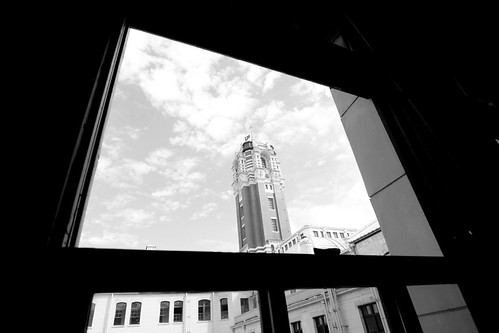
這種廣角鏡拍起來張力很帥氣~

沉靜的 百.年.風.華

意外的是總統府也剛好一併開放,既然那麼近當然是兩個都衝囉~
ㄟㄟ~ 總統府前還敢走邊吃 !?

這張拍的下去了XD

台灣晴廳,接待外賓用

從總統府內看總統府,特別的感覺

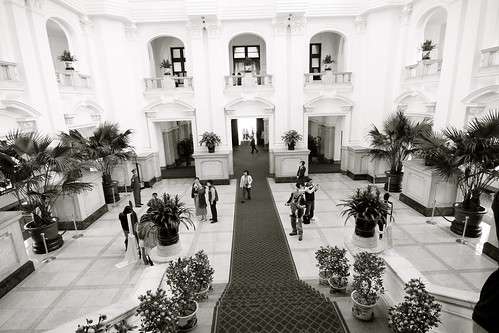
總統府Lobby

請參考台北賓館開放時間
卻被我很懶惰的拖到現在
話說很久以前我就想去台北賓館拍,
但是因為2008年整年度只開放四次,所以一直無緣
沒想到從2009年開始,台北賓館每個月會開放一次,
而且剛好是在我查詢的這個星期就有,Lucy又剛好上來,於是就被我一起拖去啦~
台北賓館正門口,進去就不能拍照了~

台北賓館後面是日式庭園,聽說是漂亮程度僅次於日本皇居的庭園,有機會一定要找我爸來看~
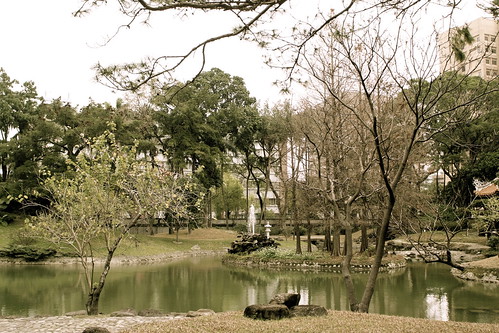
位置關係,12-24還是不能整個進去Orz
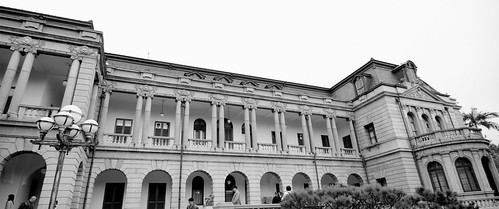
賓館後一角
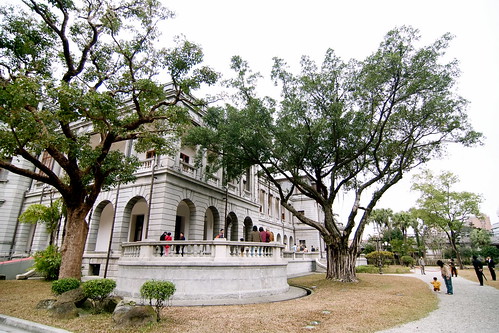
這種廣角鏡拍起來張力很帥氣~

沉靜的 百.年.風.華

意外的是總統府也剛好一併開放,既然那麼近當然是兩個都衝囉~
ㄟㄟ~ 總統府前還敢走邊吃 !?

這張拍的下去了XD
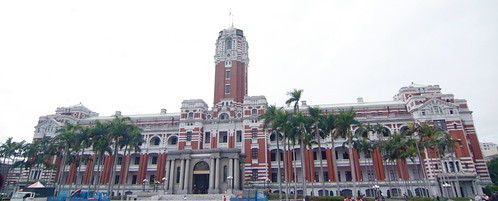
台灣晴廳,接待外賓用

從總統府內看總統府,特別的感覺
總統府Lobby
請參考台北賓館開放時間
21.2.09
J.K. Rowling Speech at Harvard Uniservity
J.K. Rowling Speaks at Harvard Commencement from Harvard Magazine on Vimeo.
Very British Style and fairly appropriate at Harvard in US :)
全文
President Faust, members of the Harvard Corporation and the Board of Overseers, members of the faculty, proud parents, and, above all, graduates.
The first thing I would like to say is ‘thank you.’ Not only has Harvard given me an extraordinary honour, but the weeks of fear and nausea I’ve experienced at the thought of giving this commencement address have made me lose weight. A win-win situation! Now all I have to do is take deep breaths, squint at the red banners and fool myself into believing I am at the world’s best-educated Harry Potter convention.
Delivering a commencement address is a great responsibility; or so I thought until I cast my mind back to my own graduation. The commencement speaker that day was the distinguished British philosopher Baroness Mary Warnock. Reflecting on her speech has helped me enormously in writing this one, because it turns out that I can’t remember a single word she said. This liberating discovery enables me to proceed without any fear that I might inadvertently influence you to abandon promising careers in business, law or politics for the giddy delights of becoming a gay wizard.
You see? If all you remember in years to come is the ‘gay wizard’ joke, I’ve still come out ahead of Baroness Mary Warnock. Achievable goals: the first step towards personal improvement.
Actually, I have wracked my mind and heart for what I ought to say to you today. I have asked myself what I wish I had known at my own graduation, and what important lessons I have learned in the 21 years that has expired between that day and this.
I have come up with two answers. On this wonderful day when we are gathered together to celebrate your academic success, I have decided to talk to you about the benefits of failure. And as you stand on the threshold of what is sometimes called ‘real life’, I want to extol the crucial importance of imagination.
These might seem quixotic or paradoxical choices, but please bear with me.
Looking back at the 21-year-old that I was at graduation, is a slightly uncomfortable experience for the 42-year-old that she has become. Half my lifetime ago, I was striking an uneasy balance between the ambition I had for myself, and what those closest to me expected of me.
I was convinced that the only thing I wanted to do, ever, was to write novels. However, my parents, both of whom came from impoverished backgrounds and neither of whom had been to college, took the view that my overactive imagination was an amusing personal quirk that could never pay a mortgage, or secure a pension.
They had hoped that I would take a vocational degree; I wanted to study English Literature. A compromise was reached that in retrospect satisfied nobody, and I went up to study Modern Languages. Hardly had my parents’ car rounded the corner at the end of the road than I ditched German and scuttled off down the Classics corridor.
I cannot remember telling my parents that I was studying Classics; they might well have found out for the first time on graduation day. Of all subjects on this planet, I think they would have been hard put to name one less useful than Greek mythology when it came to securing the keys to an executive bathroom.
I would like to make it clear, in parenthesis, that I do not blame my parents for their point of view. There is an expiry date on blaming your parents for steering you in the wrong direction; the moment you are old enough to take the wheel, responsibility lies with you. What is more, I cannot criticise my parents for hoping that I would never experience poverty. They had been poor themselves, and I have since been poor, and I quite agree with them that it is not an ennobling experience. Poverty entails fear, and stress, and sometimes depression; it means a thousand petty humiliations and hardships. Climbing out of poverty by your own efforts, that is indeed something on which to pride yourself, but poverty itself is romanticised only by fools.
What I feared most for myself at your age was not poverty, but failure.
At your age, in spite of a distinct lack of motivation at university, where I had spent far too long in the coffee bar writing stories, and far too little time at lectures, I had a knack for passing examinations, and that, for years, had been the measure of success in my life and that of my peers.
I am not dull enough to suppose that because you are young, gifted and well-educated, you have never known hardship or heartbreak. Talent and intelligence never yet inoculated anyone against the caprice of the Fates, and I do not for a moment suppose that everyone here has enjoyed an existence of unruffled privilege and contentment.
However, the fact that you are graduating from Harvard suggests that you are not very well-acquainted with failure. You might be driven by a fear of failure quite as much as a desire for success. Indeed, your conception of failure might not be too far from the average person’s idea of success, so high have you already flown academically.
Ultimately, we all have to decide for ourselves what constitutes failure, but the world is quite eager to give you a set of criteria if you let it. So I think it fair to say that by any conventional measure, a mere seven years after my graduation day, I had failed on an epic scale. An exceptionally short-lived marriage had imploded, and I was jobless, a lone parent, and as poor as it is possible to be in modern Britain, without being homeless. The fears my parents had had for me, and that I had had for myself, had both come to pass, and by every usual standard, I was the biggest failure I knew.
Now, I am not going to stand here and tell you that failure is fun. That period of my life was a dark one, and I had no idea that there was going to be what the press has since represented as a kind of fairy tale resolution. I had no idea how far the tunnel extended, and for a long time, any light at the end of it was a hope rather than a reality.
So why do I talk about the benefits of failure? Simply because failure meant a stripping away of the inessential. I stopped pretending to myself that I was anything other than what I was, and began to direct all my energy into finishing the only work that mattered to me. Had I really succeeded at anything else, I might never have found the determination to succeed in the one arena I believed I truly belonged. I was set free, because my greatest fear had already been realised, and I was still alive, and I still had a daughter whom I adored, and I had an old typewriter and a big idea. And so rock bottom became the solid foundation on which I rebuilt my life.
You might never fail on the scale I did, but some failure in life is inevitable. It is impossible to live without failing at something, unless you live so cautiously that you might as well not have lived at all - in which case, you fail by default.
Failure gave me an inner security that I had never attained by passing examinations. Failure taught me things about myself that I could have learned no other way. I discovered that I had a strong will, and more discipline than I had suspected; I also found out that I had friends whose value was truly above rubies.
The knowledge that you have emerged wiser and stronger from setbacks means that you are, ever after, secure in your ability to survive. You will never truly know yourself, or the strength of your relationships, until both have been tested by adversity. Such knowledge is a true gift, for all that it is painfully won, and it has been worth more to me than any qualification I ever earned.
Given a time machine or a Time Turner, I would tell my 21-year-old self that personal happiness lies in knowing that life is not a check-list of acquisition or achievement. Your qualifications, your CV, are not your life, though you will meet many people of my age and older who confuse the two. Life is difficult, and complicated, and beyond anyone’s total control, and the humility to know that will enable you to survive its vicissitudes.
You might think that I chose my second theme, the importance of imagination, because of the part it played in rebuilding my life, but that is not wholly so. Though I will defend the value of bedtime stories to my last gasp, I have learned to value imagination in a much broader sense. Imagination is not only the uniquely human capacity to envision that which is not, and therefore the fount of all invention and innovation. In its arguably most transformative and revelatory capacity, it is the power that enables us to empathise with humans whose experiences we have never shared.
One of the greatest formative experiences of my life preceded Harry Potter, though it informed much of what I subsequently wrote in those books. This revelation came in the form of one of my earliest day jobs. Though I was sloping off to write stories during my lunch hours, I paid the rent in my early 20s by working in the research department at Amnesty International’s headquarters in London.
There in my little office I read hastily scribbled letters smuggled out of totalitarian regimes by men and women who were risking imprisonment to inform the outside world of what was happening to them. I saw photographs of those who had disappeared without trace, sent to Amnesty by their desperate families and friends. I read the testimony of torture victims and saw pictures of their injuries. I opened handwritten, eye-witness accounts of summary trials and executions, of kidnappings and rapes.
Many of my co-workers were ex-political prisoners, people who had been displaced from their homes, or fled into exile, because they had the temerity to think independently of their government. Visitors to our office included those who had come to give information, or to try and find out what had happened to those they had been forced to leave behind.
I shall never forget the African torture victim, a young man no older than I was at the time, who had become mentally ill after all he had endured in his homeland. He trembled uncontrollably as he spoke into a video camera about the brutality inflicted upon him. He was a foot taller than I was, and seemed as fragile as a child. I was given the job of escorting him to the Underground Station afterwards, and this man whose life had been shattered by cruelty took my hand with exquisite courtesy, and wished me future happiness.
And as long as I live I shall remember walking along an empty corridor and suddenly hearing, from behind a closed door, a scream of pain and horror such as I have never heard since. The door opened, and the researcher poked out her head and told me to run and make a hot drink for the young man sitting with her. She had just given him the news that in retaliation for his own outspokenness against his country’s regime, his mother had been seized and executed.
Every day of my working week in my early 20s I was reminded how incredibly fortunate I was, to live in a country with a democratically elected government, where legal representation and a public trial were the rights of everyone.
Every day, I saw more evidence about the evils humankind will inflict on their fellow humans, to gain or maintain power. I began to have nightmares, literal nightmares, about some of the things I saw, heard and read.
And yet I also learned more about human goodness at Amnesty International than I had ever known before.
Amnesty mobilises thousands of people who have never been tortured or imprisoned for their beliefs to act on behalf of those who have. The power of human empathy, leading to collective action, saves lives, and frees prisoners. Ordinary people, whose personal well-being and security are assured, join together in huge numbers to save people they do not know, and will never meet. My small participation in that process was one of the most humbling and inspiring experiences of my life.
Unlike any other creature on this planet, humans can learn and understand, without having experienced. They can think themselves into other people’s minds, imagine themselves into other people’s places.
Of course, this is a power, like my brand of fictional magic, that is morally neutral. One might use such an ability to manipulate, or control, just as much as to understand or sympathise.
And many prefer not to exercise their imaginations at all. They choose to remain comfortably within the bounds of their own experience, never troubling to wonder how it would feel to have been born other than they are. They can refuse to hear screams or to peer inside cages; they can close their minds and hearts to any suffering that does not touch them personally; they can refuse to know.
I might be tempted to envy people who can live that way, except that I do not think they have any fewer nightmares than I do. Choosing to live in narrow spaces can lead to a form of mental agoraphobia, and that brings its own terrors. I think the wilfully unimaginative see more monsters. They are often more afraid.
What is more, those who choose not to empathise may enable real monsters. For without ever committing an act of outright evil ourselves, we collude with it, through our own apathy.
One of the many things I learned at the end of that Classics corridor down which I ventured at the age of 18, in search of something I could not then define, was this, written by the Greek author Plutarch: What we achieve inwardly will change outer reality.
That is an astonishing statement and yet proven a thousand times every day of our lives. It expresses, in part, our inescapable connection with the outside world, the fact that we touch other people’s lives simply by existing.
But how much more are you, Harvard graduates of 2008, likely to touch other people’s lives? Your intelligence, your capacity for hard work, the education you have earned and received, give you unique status, and unique responsibilities. Even your nationality sets you apart. The great majority of you belong to the world’s only remaining superpower. The way you vote, the way you live, the way you protest, the pressure you bring to bear on your government, has an impact way beyond your borders. That is your privilege, and your burden.
If you choose to use your status and influence to raise your voice on behalf of those who have no voice; if you choose to identify not only with the powerful, but with the powerless; if you retain the ability to imagine yourself into the lives of those who do not have your advantages, then it will not only be your proud families who celebrate your existence, but thousands and millions of people whose reality you have helped transform for the better. We do not need magic to change the world, we carry all the power we need inside ourselves already: we have the power to imagine better.
I am nearly finished. I have one last hope for you, which is something that I already had at 21. The friends with whom I sat on graduation day have been my friends for life. They are my children’s godparents, the people to whom I’ve been able to turn in times of trouble, friends who have been kind enough not to sue me when I’ve used their names for Death Eaters. At our graduation we were bound by enormous affection, by our shared experience of a time that could never come again, and, of course, by the knowledge that we held certain photographic evidence that would be exceptionally valuable if any of us ran for Prime Minister.
So today, I can wish you nothing better than similar friendships. And tomorrow, I hope that even if you remember not a single word of mine, you remember those of Seneca, another of those old Romans I met when I fled down the Classics corridor, in retreat from career ladders, in search of ancient wisdom:
As is a tale, so is life: not how long it is, but how good it is, is what matters.
I wish you all very good lives.
Thank you very much.
[超閃光文,請小心服用] Dear Baby

我不在你身邊你又開始難過了
真是個令人掛心的可愛Baby :)
I promise I won't let u down
***********************************************************************************
有的時候,話說的少,反而講的東西更多,對你的感覺就是這樣
我不聰明,表達也不夠好,但是我盡力做到我能做的,
我不求讓你感動,只希望你能過的好,過的快樂
畢業後,我們不能再回到過去學生時代的浪漫,
而是只能面對社會的殘酷
你不喜歡,我也不喜歡,但是這是現實
現實壓得我們喘不過氣,但我們能要努力吸到那一口空氣
上天很愛整我們,讓我們常常分隔兩地,相聚時間很少,
我也曾經憤怒的指責上天的殘酷,
可是後來我知道,那是無意義的
把這些考驗克服掉,才是我必須做的
我們是不同的個體,我不能知道你所承擔的有多重,
但是可以的話,我希望連你那份一起承擔下來
你曾經提過責任,
對我來說,責任不是無形,他已經是我必須背負的東西,
痛苦嗎? 對我而言,比起你不在身邊的那種心情,他輕鬆多了,
讓你快樂,讓你幸福,讓你沒有煩惱,那就是我的責任
這不是說你不能跟我一起共患難,
如果我能讓你過好的生活,為什麼要讓你共患難呢?
你不知道你笑容的力量,
看到你的笑容,聽到你的笑聲,
那就是我努力的動力,不管遇到什麼困難,我就能撐過去
我每天最期待的,就是回家看到你一個笑容,他能讓我安心入睡
而你所有的情緒,也牽動著我,
你難過,我比你更難過,
你快樂,我不可能難過
這沒有什麼苦不苦,我視之為理所當然,
在你願意接受我的那一刻,上天已經給足我所有了
我們還能走多久? 我覺得是一輩子,
只要有你的支持, Impossible is nothing.
以後也請多多包涵我這個笨笨的小胖
看起來喝起來都很厲害的日本飲料

這是前幾天去做市場調查順便買來的飲料,
因為看起來很厲害,所以就買了 - 我是視覺動物...XDrz
喝了一口,皺起眉頭 (李探長:不干我的事~怒!),卻笑了一下,
我真的不知道怎麼形容這個飲料,非常之妙~~
喝一口會感覺有很多種不同口味接踵而來,
很有七傷拳的威力(其實我比較想講北斗七星拳,但北斗七星全是一次爆開的@@)
先是一種味道,然後第二種,大概到第五種的時候,
突然五種口味會一次炸開,我只能說
真.的.很.屌!!
20.2.09
Era of Credit Crisis, Welcome!
The Crisis of Credit Visualized from Jonathan Jarvis on Vimeo.
This film take a very funny and brilliant way to state how the recent economic crisis happened and how it expanded from US to worldwide.
I really love the way of this kind storytelling, humour and clear :)
so I am fairly pleased to share with u.
Cited from 廢業青年日記
11.2.09
男人,女人

男人跟女人有著決定性的不同,從根本的思考來說
男人永遠不了解女人要什麼,女人也永遠不了解為什麼男人不了解
反之亦然
女人能夠理性,但是在某些時候卻不願意理性,
男人能夠感性,但是卻在很多時候不想要感性,
這些時候撞在一起,火花綻放~
雖然彼此永遠不可能懂,但是如果因為這樣而放棄,那永遠不會有結果
試著站在對方的位置去想
下課~ (收書本)
10.2.09
[假會基本功]移軸鏡效果
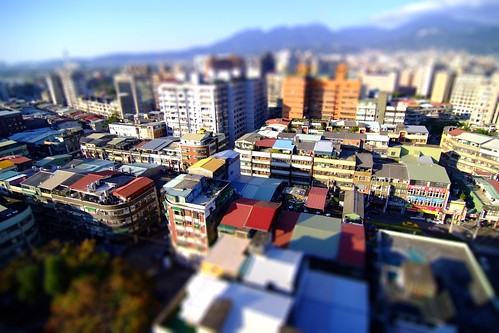
這是一篇教你怎麼假會的教學文
這次要學的是怎麼要很快的把一般照片修成有移軸鏡效果的感覺
所謂的移軸鏡效果,英文叫做Tilt Shift,
是把整張照片弄起來的效果感覺像是在拍模型的感覺
網站在此
只要把照片上傳或給照片網址到這個網站,再按輸出就大功告成了~
比起某格友上次大費周章的用PS玩出一張抽菸地景色來的快多了,科科~
訂閱:
文章 (Atom)


 發表文章
發表文章


